The 50 Percent Line Behind Old Naples Renovations
October 1, 2026
October 1, 2026
The contractor's estimate comes back higher than the buyer expected, and not because of granite or cabinetry. It is higher because the renovation, once priced out room by room, crosses a threshold the buyer never asked about during the showing: the point where the cost of the work exceeds half the value of the existing structure. Cross that line in Old Naples and the project stops being a renovation. Under the City of Naples' Substantial Improvement rule, once repair or improvement costs exceed 50 percent of a building's market value, the entire structure has to be brought up to current flood elevation and building code, not just the rooms being touched. A kitchen gut and a primary suite addition can trigger a full-house rebuild requirement on a cottage that looked, from the street, like a straightforward fixer.
This is the detail a median sale price cannot show a buyer. Two nearly identical cottages a block apart in Old Naples can carry the same list price and completely different renovation ceilings, because the number that matters isn't the sale price. It's the appraised value of the structure itself, measured against a renovation budget that has to survive a line the city draws at 50 percent.
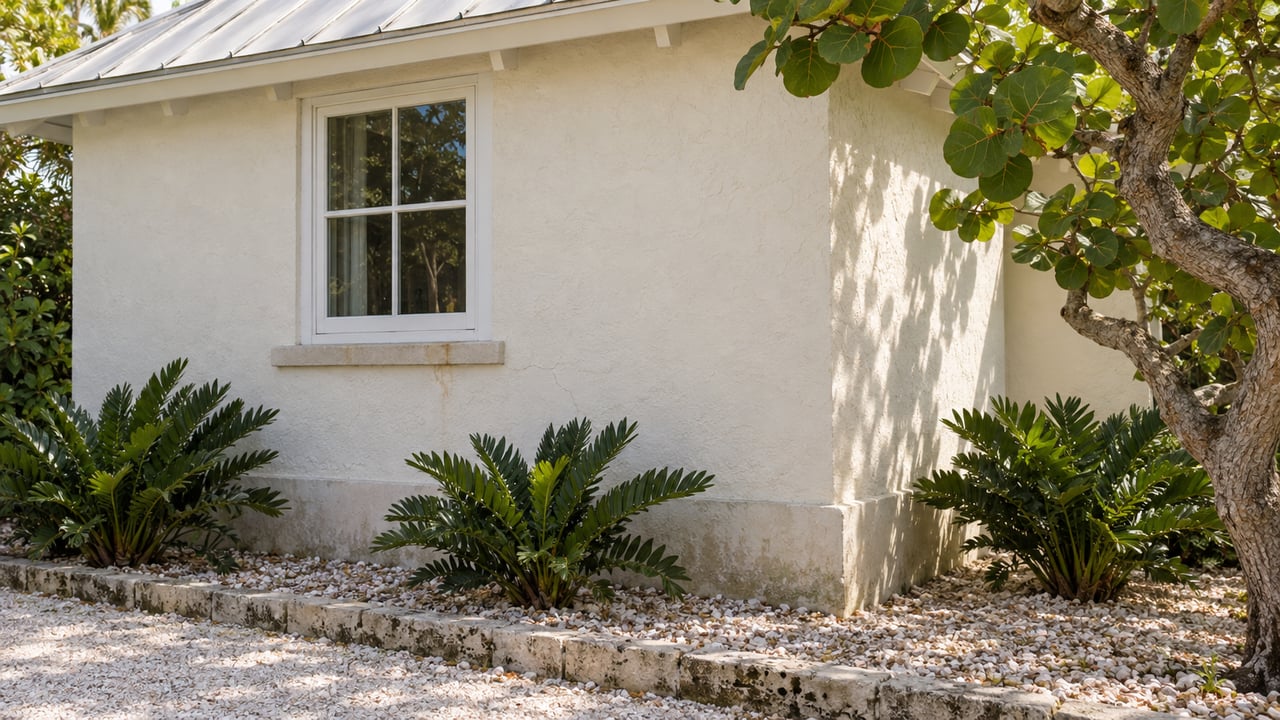
Old Naples still has a meaningful share of original cottages and low-slung ranch houses, many built decades before current flood maps and wind codes existed. On the most sought-after blocks, those houses increasingly change hands for what the lot underneath them is worth rather than for the structure standing on it. The math explains why. A buyer who wants to preserve an older cottage's footprint and character has to price a renovation that stays under the 50 percent line, which is a narrow needle to thread once flooring, mechanicals, roofing, and code-required upgrades are added up. Once the estimate crosses that line, a full teardown and rebuild to current elevation standards often ends up cheaper and faster than trying to renovate around the threshold.
That has made new construction the default move rather than the exception on older Old Naples lots, and it shows up in who's doing the building. Architecture firms including Stofft Cooney, MHK Architecture, Kukk Architecture, and H-L Design have been behind a steady run of new Old Naples construction, working in a mix of British West Indies and coastal contemporary styles that the City of Naples' design standards are built to accommodate while still preserving the neighborhood's historic character. None of that activity is optional taste. It's the practical output of a 50 percent rule that makes rebuilding the more predictable path for a lot that's already crossed the threshold once.
The flood zone letter on a property does more than sit on a FEMA map. It sets the base flood elevation the structure has to clear, and clearing it or falling short of it by even a foot can separate two houses on the same street by tens of thousands of dollars a year in flood insurance. Some Old Naples blocks fall in a lower-risk X zone while the block next to them sits in an AE zone with a specific base flood elevation number attached, like AE7 or AE9. Under the City of Naples' building code, the finish floor has to sit at least a foot above that base elevation, meaning an AE9-zoned lot requires a finished floor of 10 feet or higher.
The buyer decision that follows is straightforward to describe and easy to skip during a fast-moving showing schedule: pull the flood zone designation and the elevation certificate before falling for a specific cottage, not after. Two properties with the same square footage and the same asking price can carry meaningfully different annual carrying costs once insurance is priced against actual elevation rather than against the flood zone letter alone. The elevation certificate is the document that turns a flood zone letter into an actual number, and it is worth ordering, or requesting from the seller, before a renovation budget or an offer price gets locked in.
Here is the part of this story that makes the timing matter right now rather than in some general future. Collier County has been working with FEMA since 2013 to finalize an updated set of flood maps using newer elevation data than what the county's last full map update relied on. That update, known as the 2026 Physical Map Revision, is projected for adoption sometime between August and October 2026, pending the outcome of any appeals, according to Collier County's floodplain management section. The county's current effective coastal flood map is still in place, but that map is now the outgoing version rather than the settled one.
What that means in practice is that a buyer touring Old Naples cottages this fall is shopping against a flood map that insurers, lenders, and contractors already know is being superseded. A base flood elevation that applies to a given lot today could shift once the new map takes effect, which changes the renovation math described above and can change the insurance quote a buyer gets six months into ownership. The safer move before writing an offer on a property where a future renovation is part of the plan is running the address through both the current effective map and FEMA's preliminary comparison tool, and pricing insurance under both scenarios rather than just the one shown on today's listing sheet.
Old Naples is absorbing this flood-rule reality at the same moment its northern edge is being remade at a much larger scale. The Four Seasons redevelopment of the former Naples Beach Hotel and Golf Club site opened to the public in November 2025, bringing a new hotel, beachside and golf-side residences, and a Tom Fazio-designed golf course expected to open in 2026. Further into the neighborhood's interior, a six-residence infill project called The Cayden, priced from roughly $5 million to more than $15 million, was built out on a similar early-2026 timeline just steps from Fifth Avenue South.
Neither project changes the flood elevation math on a 1960s cottage two streets over. But both are visible proof that Old Naples land is being valued and rebuilt on its own terms right now, which is exactly the environment where the gap between a renovation-ready lot and a rebuild-required lot becomes the difference that actually moves a buyer's budget.
Does every Old Naples property face the same renovation ceiling? No. The 50 percent threshold is calculated against each structure's individual appraised value, so a modestly valued cottage can hit that ceiling on a smaller renovation budget than a larger, higher-valued home on the same block.
A renovation budget in Old Naples is really two numbers stacked on top of each other: what the work costs, and how close that cost sits to the line the city draws at half the structure's value. Reading a listing without pulling both numbers is how a straightforward remodel turns into a rebuild nobody planned for.
If you're weighing a specific Old Naples address against that math, Navarro Group SWFL can help you pull the flood zone, the elevation certificate, and a realistic renovation ceiling before you write the offer, not after.
This article is general information, not legal, tax or financial advice. Consult a qualified professional about your situation.
Stay up to date on the latest real estate trends.
We pride ourselves in providing personalized solutions that bring our clients closer to their dream properties and enhance their long-term wealth. Contact us for an experience that moves you!